VĂN MIẾU GATE (THE MAIN ENTRANCE)
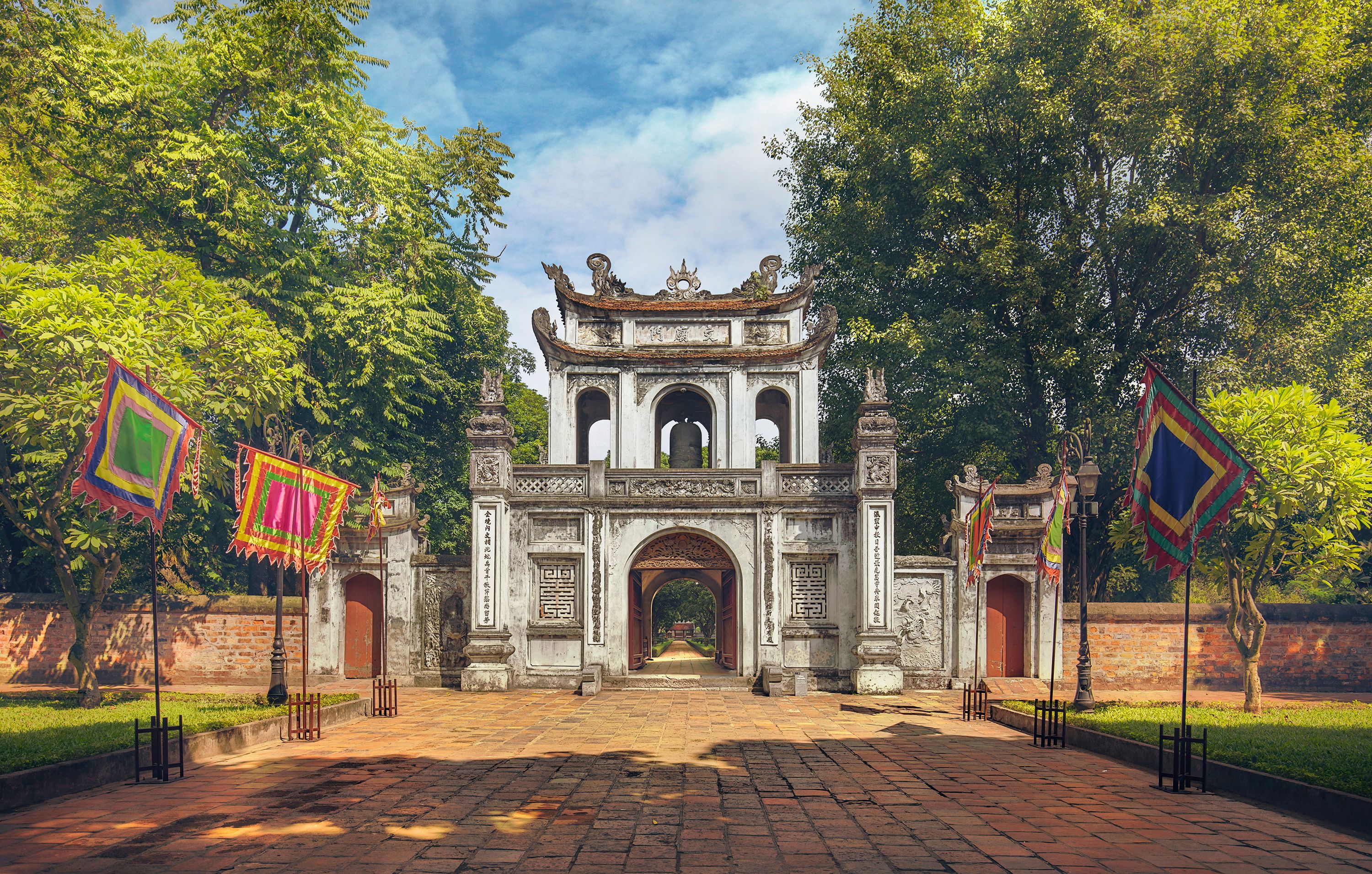
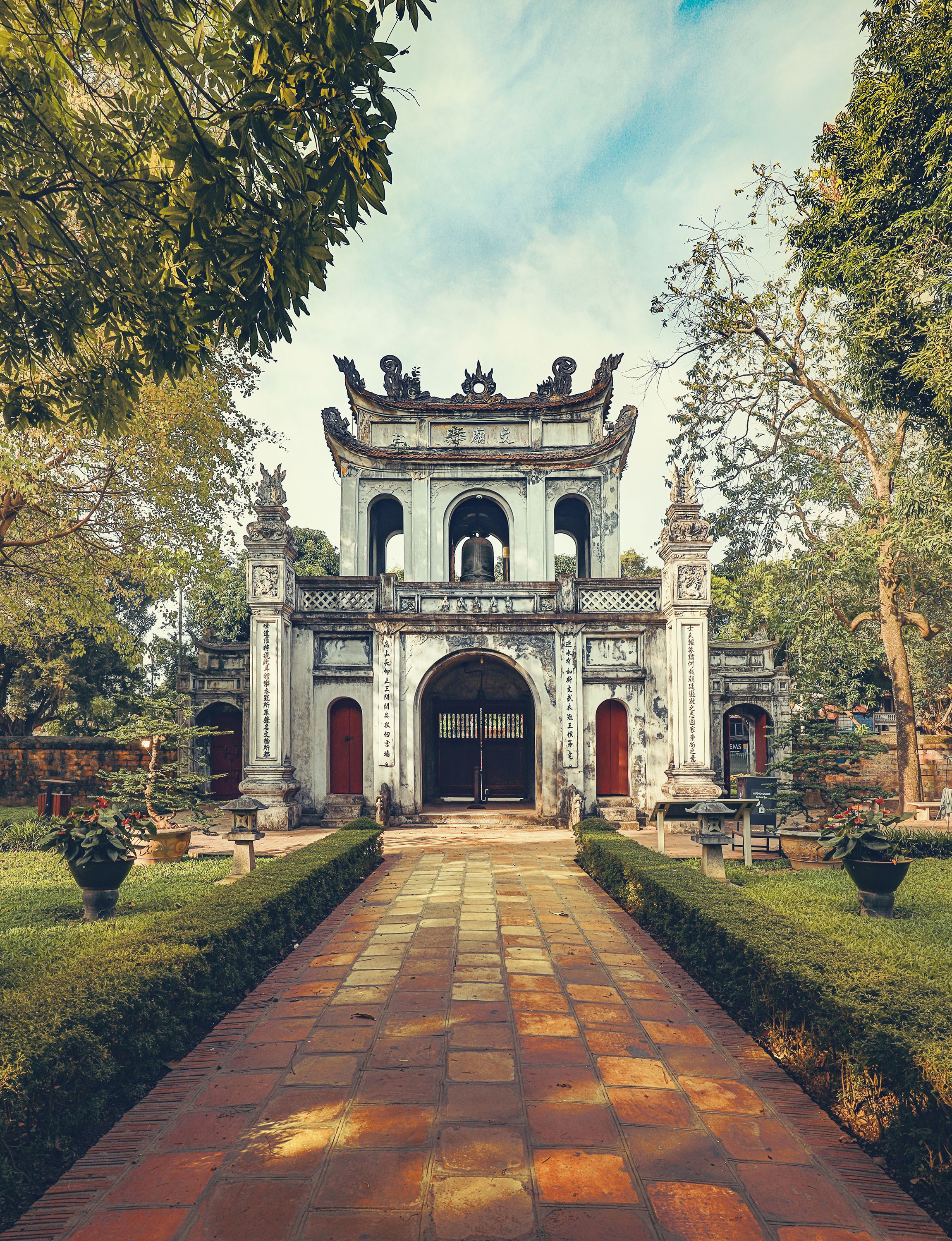
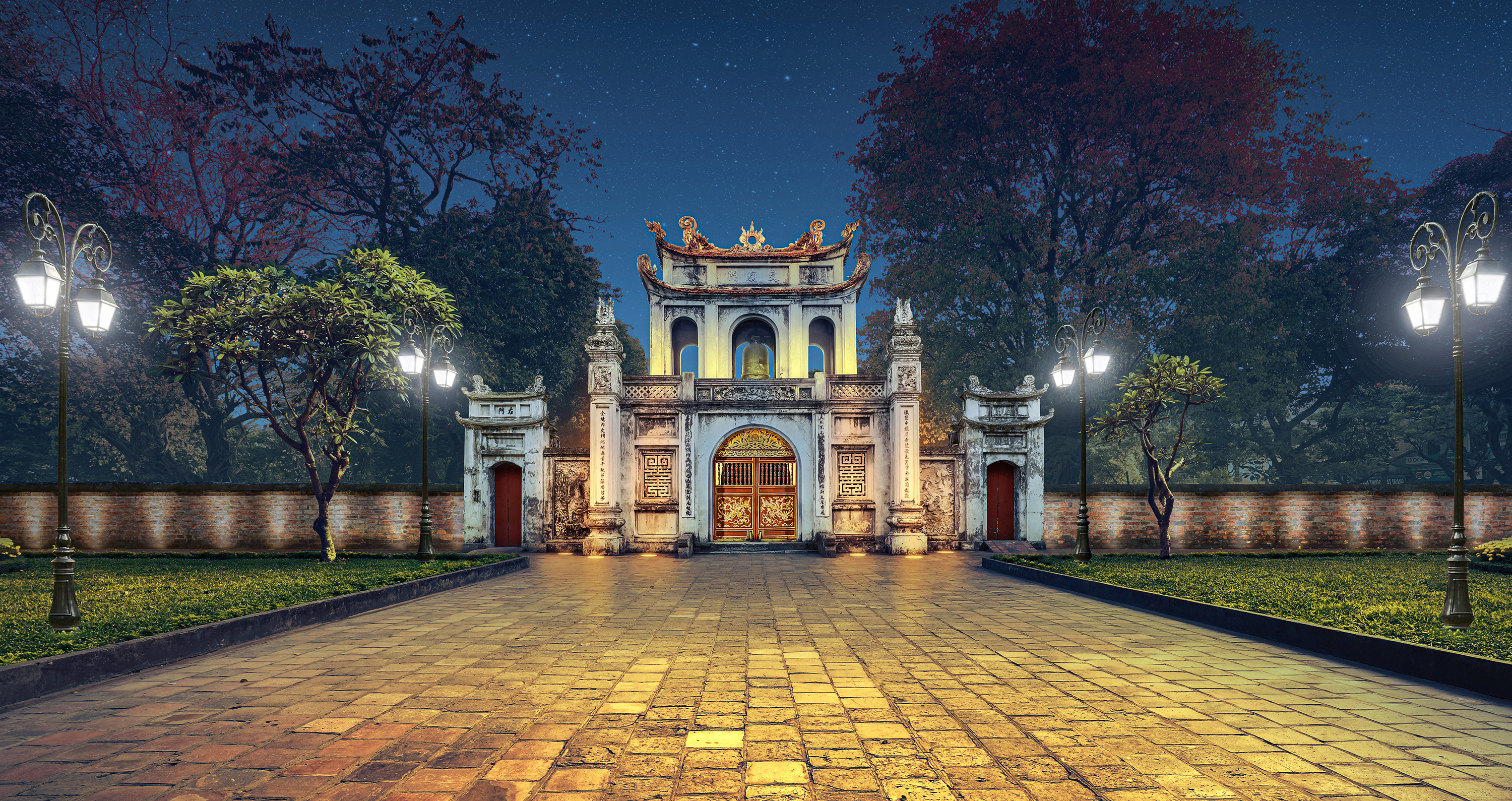
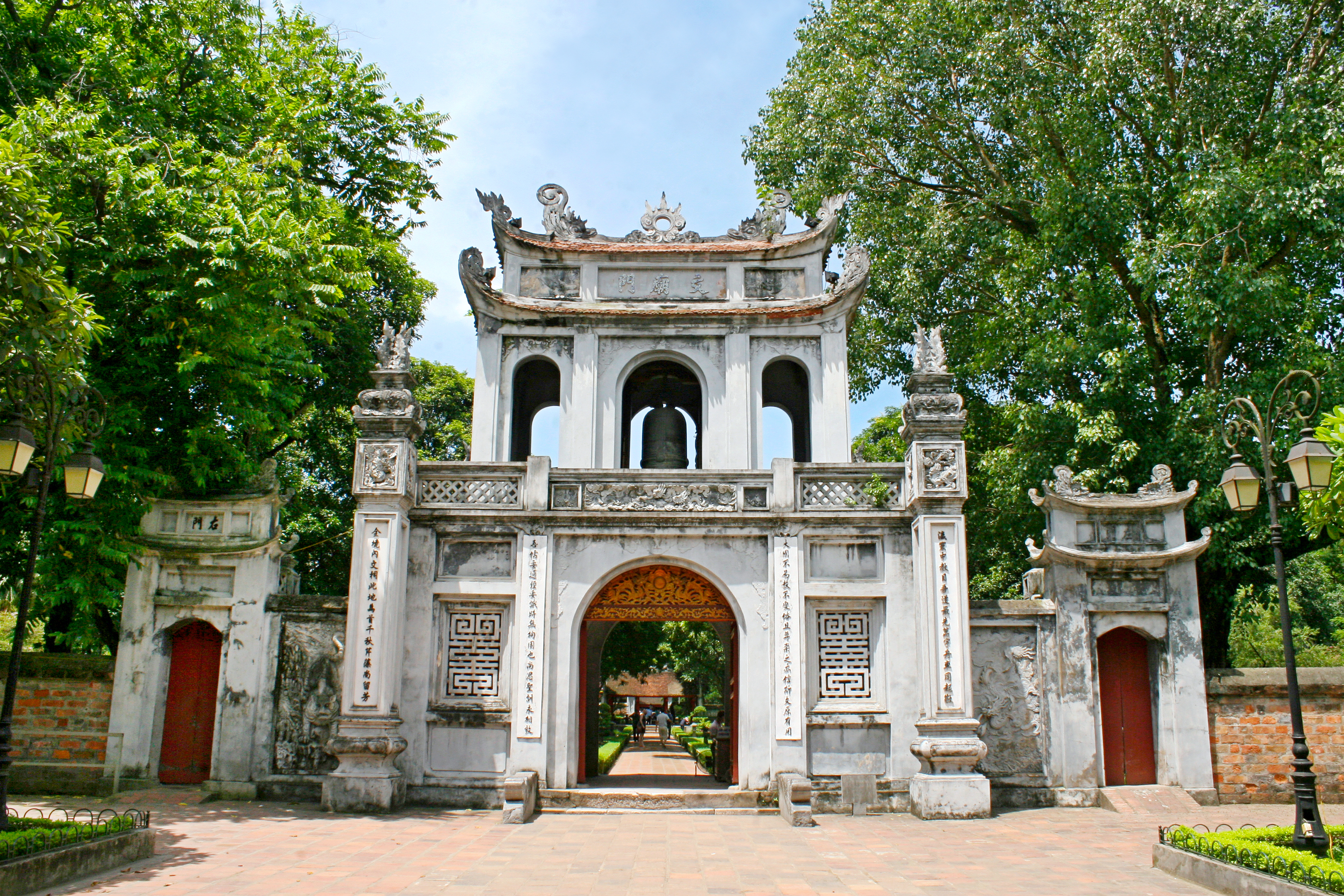
The main entrance of Văn Miếu - Quốc Tử Giám was constructed in the early 20th century. Above the entrance are the three Chinese characters “Văn Miếu Môn,” meaning “Gate of Văn Miếu.”
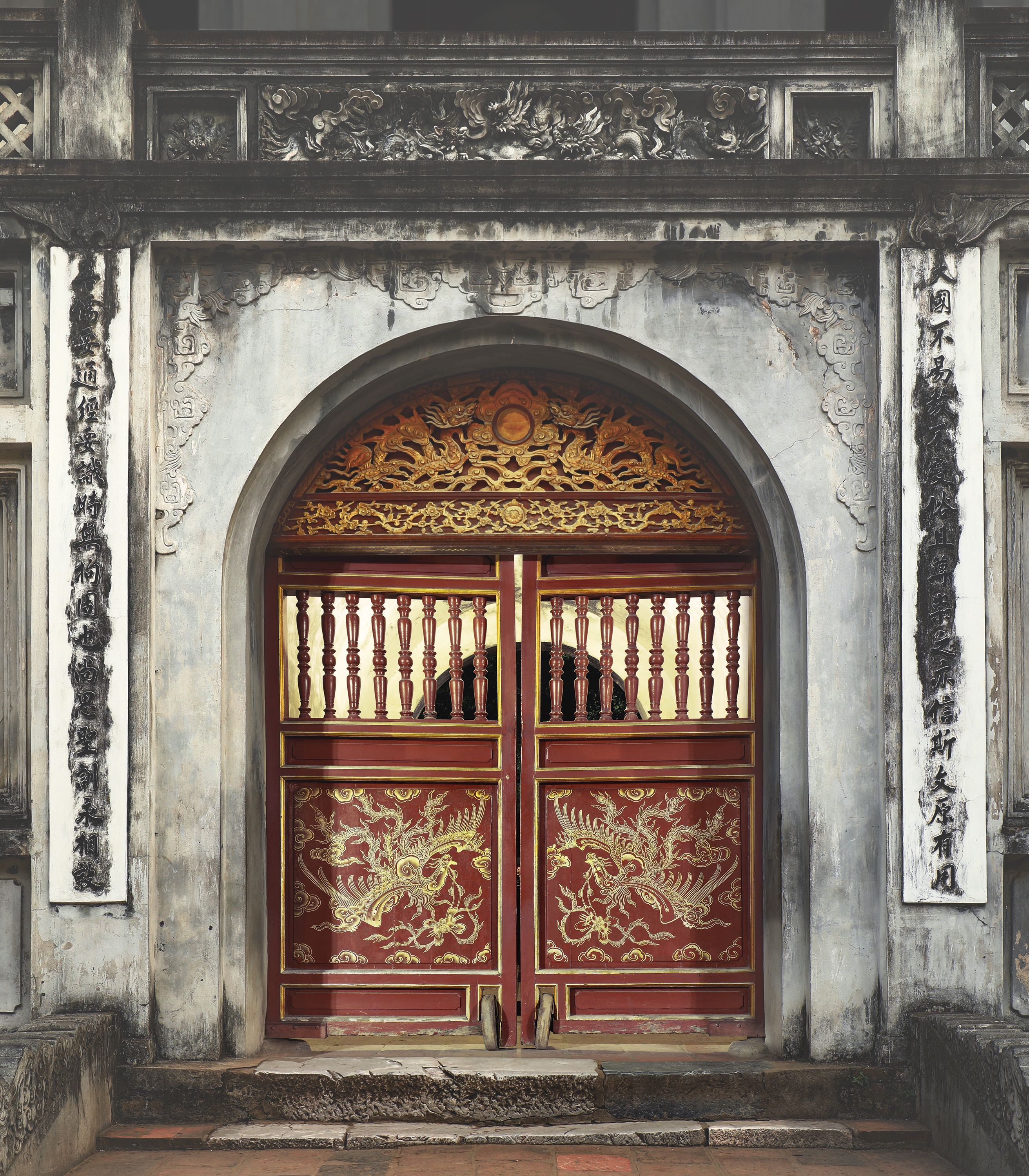
At first glance, the gate appears as an independent architectural structure featuring two levels, three entrances, and eight roofs. The central entrance consists of a two-story square-plan structure. On the lower level, the wooden doors are made of ironwood and decorated with semi-circular relief carvings depicting dragons facing the moon.
The upper level is designed with eight roofs, including four extended eave roofs and four curved ridge roofs rising gracefully at the corners. Along the roof ridge is a decorative motif of two dragons facing the moon.
A bronze bell is suspended within the structure, measuring 2,100 mm in height and 990 mm in diameter. The bell was cast in 2000 to commemorate the 990th anniversary of Thăng Long – Hanoi.
In front of the gate stands a pair of stylized stone dragons from the Lê Dynasty, while inside the gate are reliefs of stone dragons from the Nguyễn Dynasty. Both sides of the gate are adorned with numerous Chinese parallel inscriptions, including the following notable couplet:
“Đại quốc bất dịch giáo, bất biến tục, thả tôn sùng chi, diệc tín tư văn nguyên hữu dụng.
Ngô Nho yếu thông kinh, yếu thức thời vô câu cố dã, thương tư thánh huấn vĩnh tương đôn.”
Meaning:
“A great nation preserves its educational traditions and customs unchanged, honoring Confucian learning and believing in the enduring value of culture and scholarship.
Confucian scholars should master the classics and understand the spirit of their times, avoiding rigidity and stubbornness, while always upholding the teachings of the sages.”
On either side of the gate are two large relief artworks:
On the left is “Long Ngư Tụ Hội” (Gathering of Dragon Fish), depicting dragon fish emerging through clouds — symbolizing scholars achieving success and ascending in their careers.
On the right is “Mãnh Hổ Hạ Sơn” (The Fierce Tiger Descending the Mountain), portraying a powerful tiger emerging from mountainous clouds and forests — symbolizing intellectuals confidently entering life with strength and aspiration.