.jpg)
KHU NHẬP ĐẠO VÀ ĐẠI TRUNG MÔN
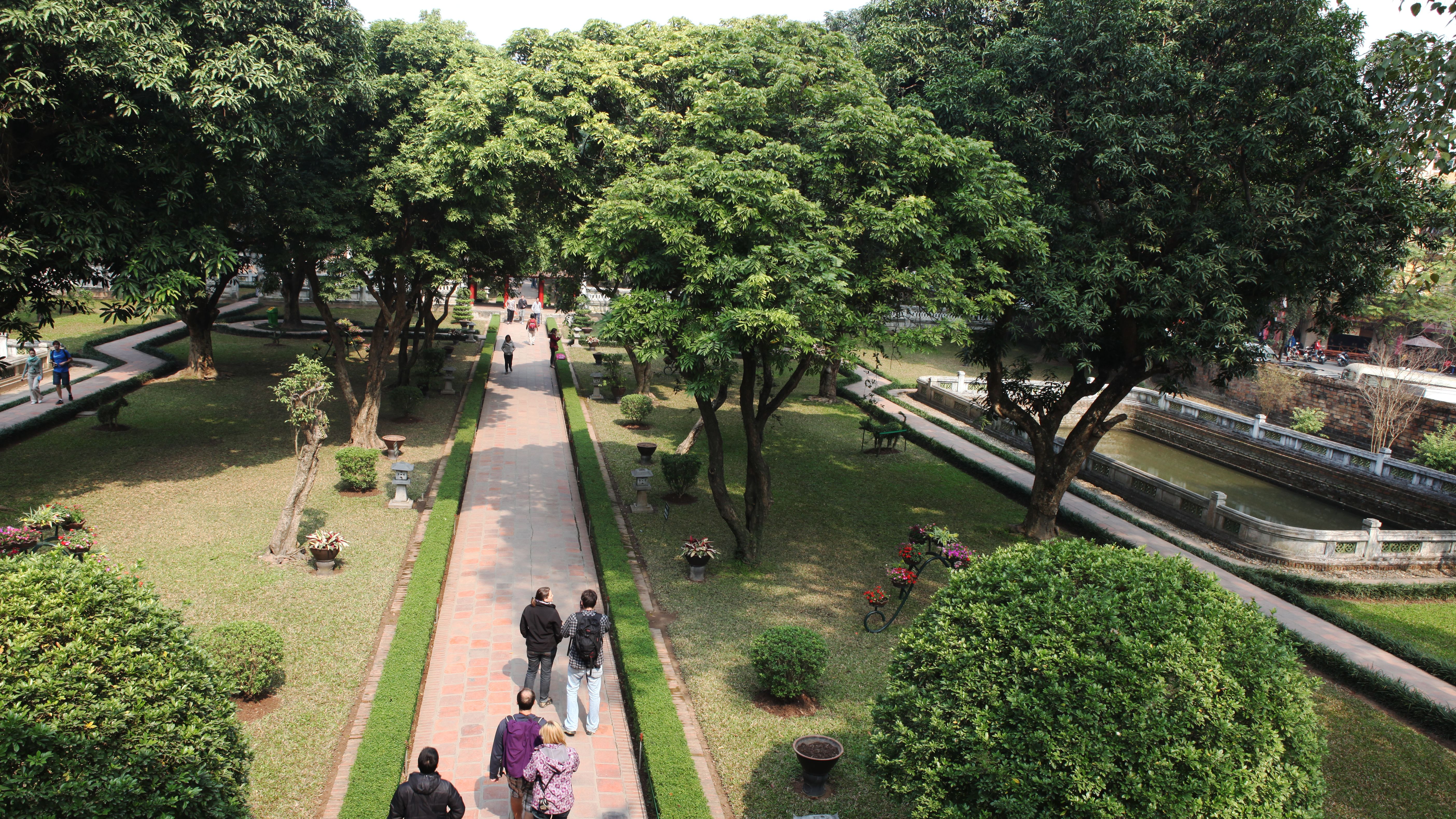
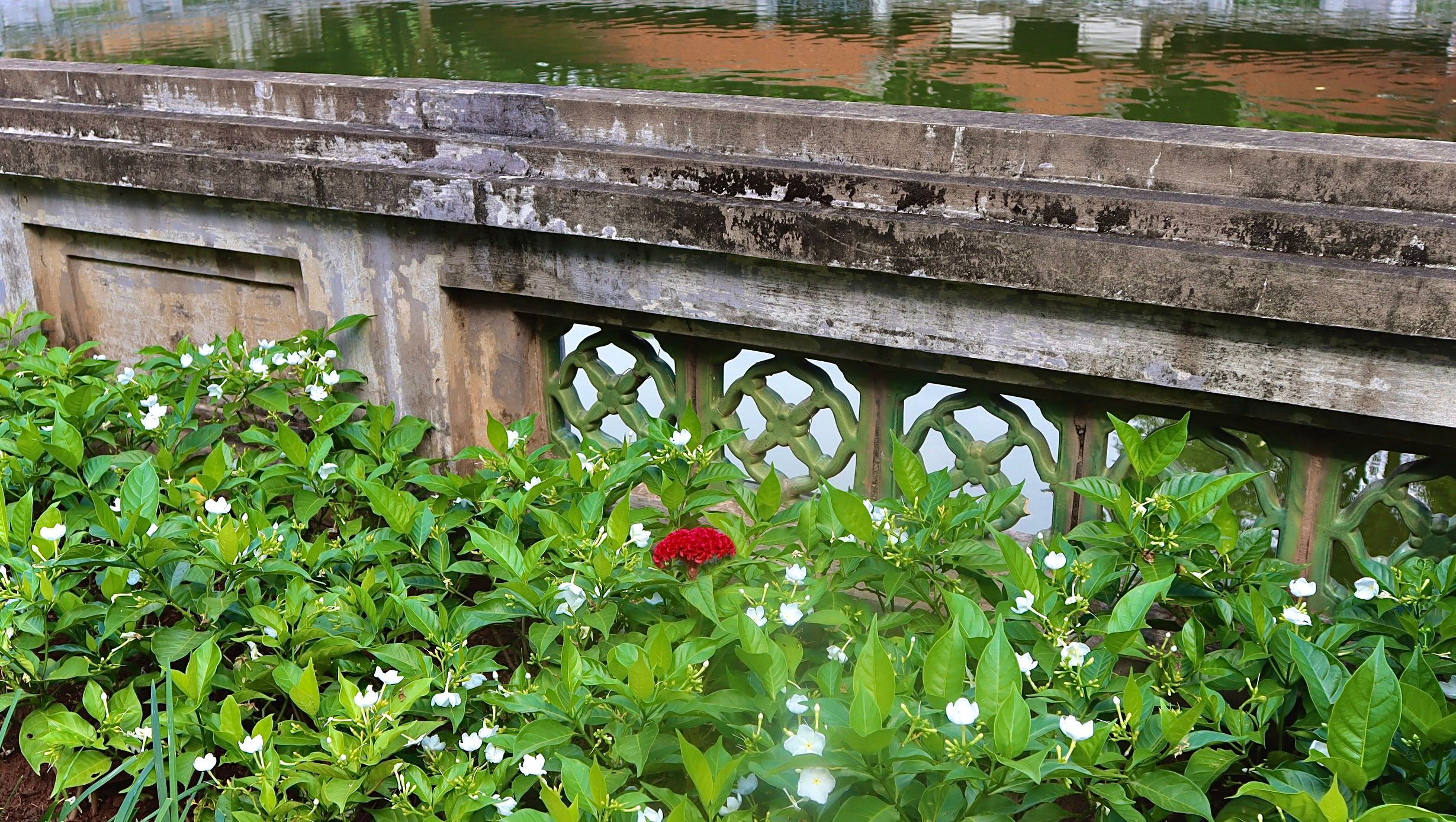
Qua cổng Văn Miếu vào khu thứ nhất gọi là khu Nhập đạo. Đây là không gian cây xanh và thảm cỏ, hai bên có hai hồ nước.
Con đường chính lát gạch đỏ dẫn đến cổng Đại Trung để vào khu thứ hai. Hai bên có hai đường dẫn vào hai cổng nhỏ, tên của mỗi cổng này đều mang ý nghĩa biểu trưng cho trí tuệ: Thành Đức (Đạo đức tốt) và Đạt Tài (Tài năng giỏi).
Cổng Đại Trung mang phong cách kiến trúc thời Hậu Lê (TK 15-17). Công trình bằng gỗ 3 gian, 8 hàng cột gỗ, sơn son, 0 có cửa. Những cột gỗ tròn đều đặt trên bệ đỡ bằng đá chứ không chôn xuống nền và chính sức nặng của mái công trình đã làm nên sự ổn định và vững vàng cho cột chống.
Mái cổng Đại Trung lợp ngói mũi hài – còn gọi là ngói vảy rồng (loại ngói có từ triều Lý, vẫn được sử dụng ở các công trình kiến trúc của các triều đại về sau), dốc mái thẳng, trang trí mái là hai con cá chép chầu bình móc trang trí bằng các mảnh ghép sành sứ là đặc trưng lối trang trí kiến trúc trong cung đình của triều Nguyễn. Hình ảnh cá chép là hình ảnh ẩn dụ muốn nhắc nhở những người học trò nếu muốn có đc công danh sự nghiệp thành đạt thì phải ra sức phấn đấu, dùi mài kinh sử để có ngày đỗ đạt vinh quy bái tổ.
Công trình đặt trên nền gạch bó vỉa đá, ba bậc lên xuống, tạo cảm giác tôn nghiêm bề thế, nền cổng lát gạch Bát Tràng. Hai bên cổng Đại Trung có hai cổng nhỏ Thành Đức và Đạt Tài, là một trong những tiêu chí giáo dục xưa của người Việt Nam là 1 người phải vừa có đức vừa có tài.