THE THÀNH ĐẠT COURTYARD AND KHUÊ VĂN CÁC
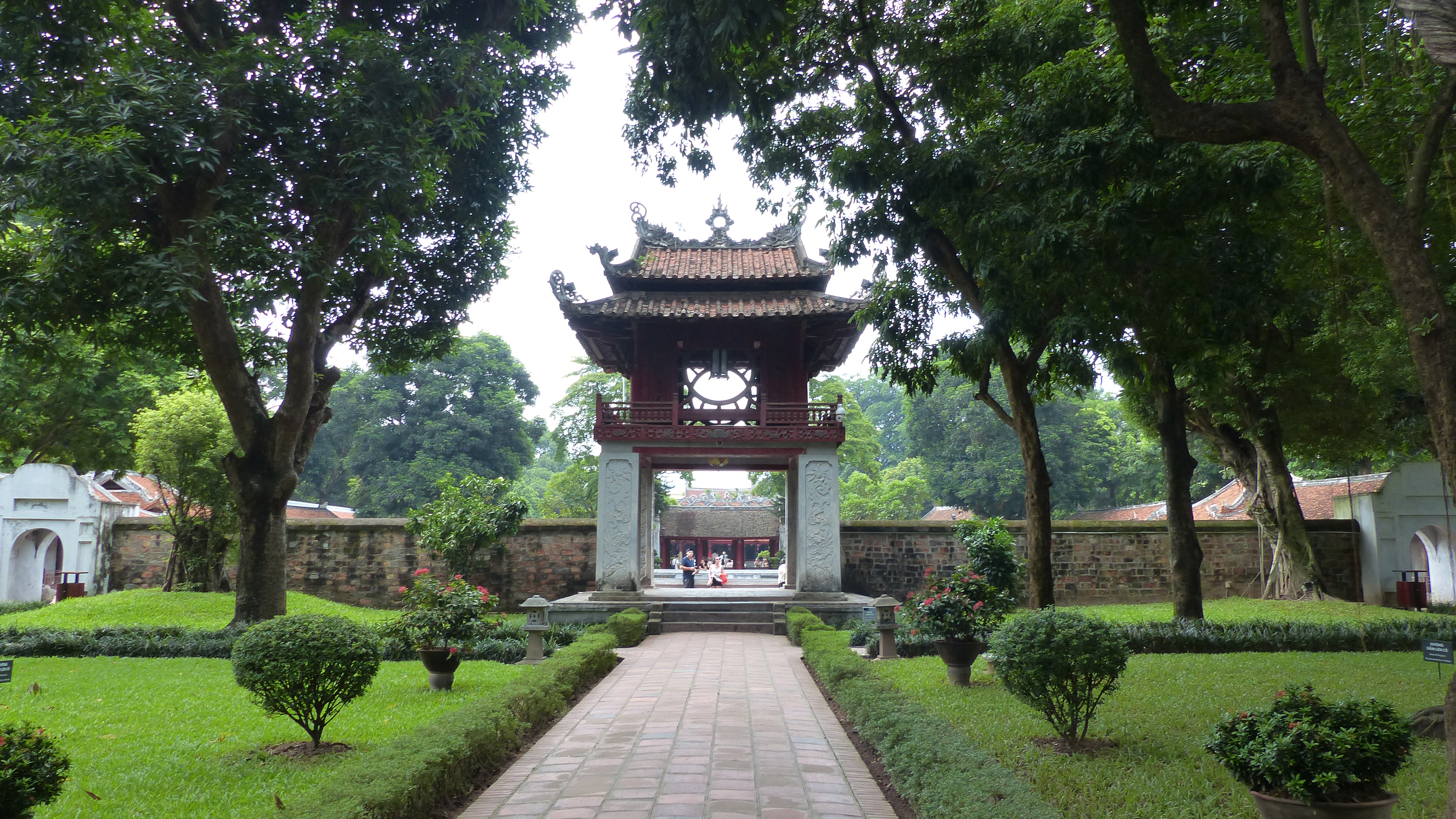
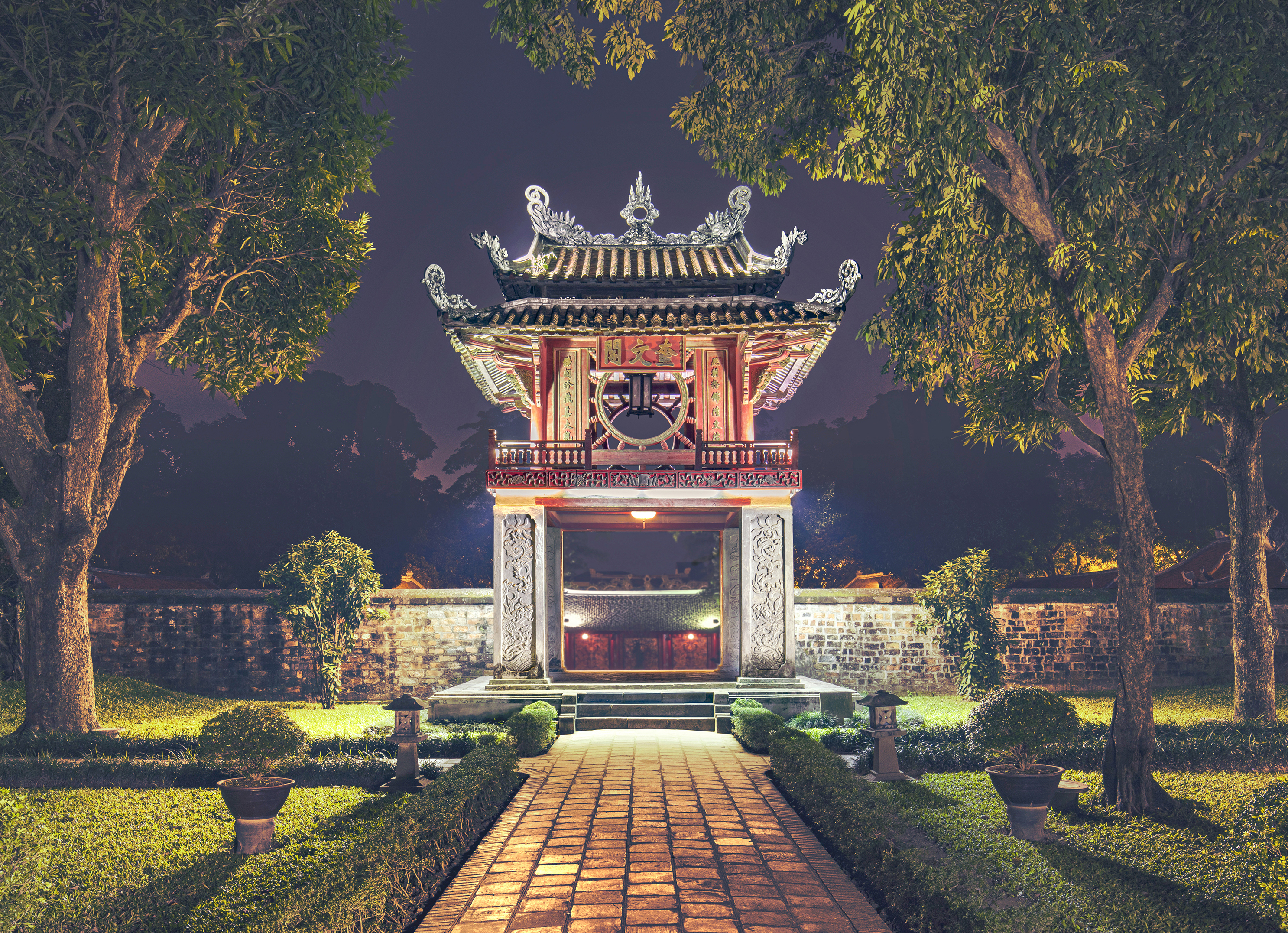
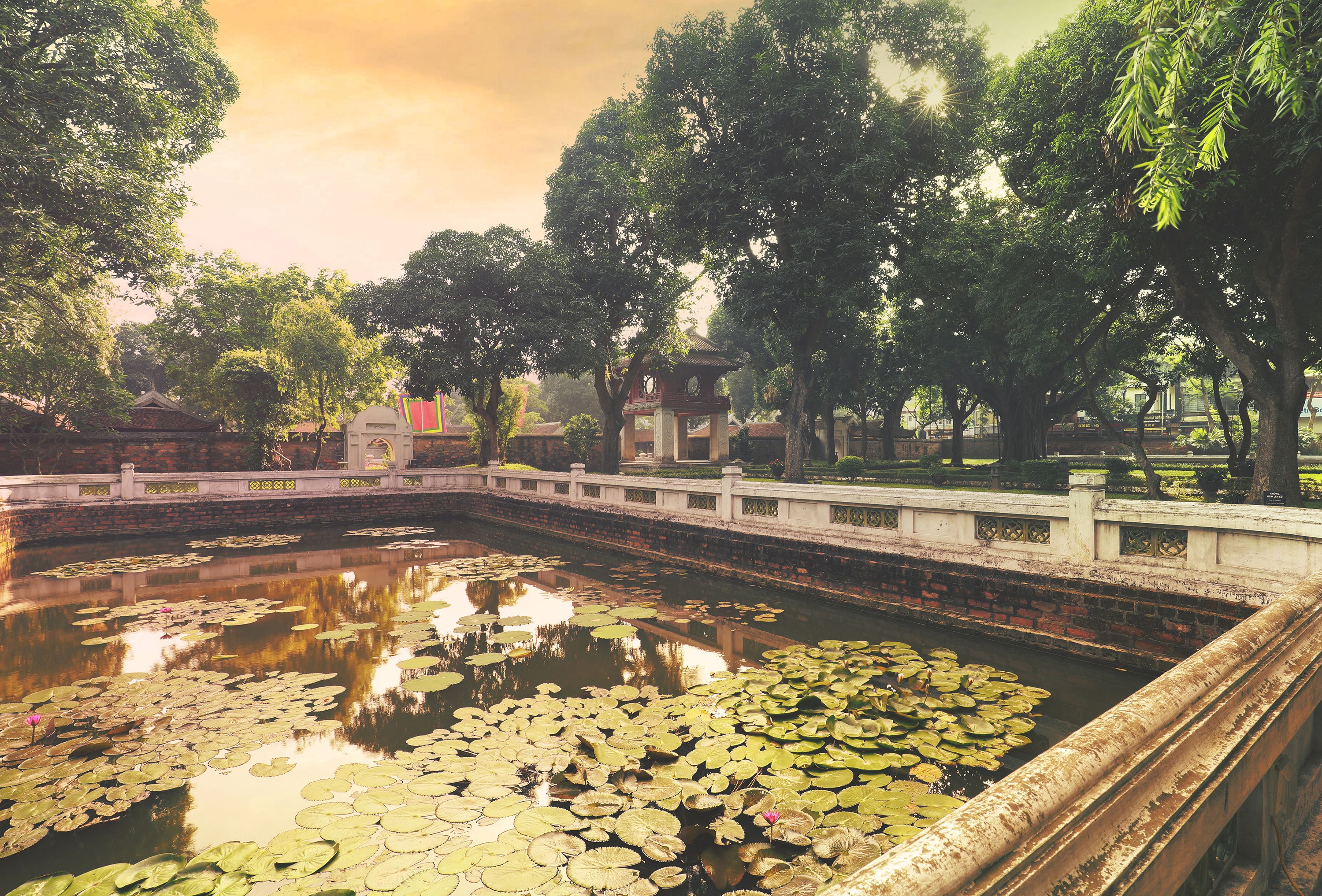
The second courtyard is known as the Thành Đạt Courtyard (Courtyard of Great Success). Like the first courtyard, it is arranged with three pathways leading further into the complex. The central path connects the Đại Trung Gate to Khuê Văn Các, while the two side paths lead respectively to Bí Văn Gate (Gate of Refinement of the text) and Súc Văn Gate (Gate of Magnificence and conciseness of the text).
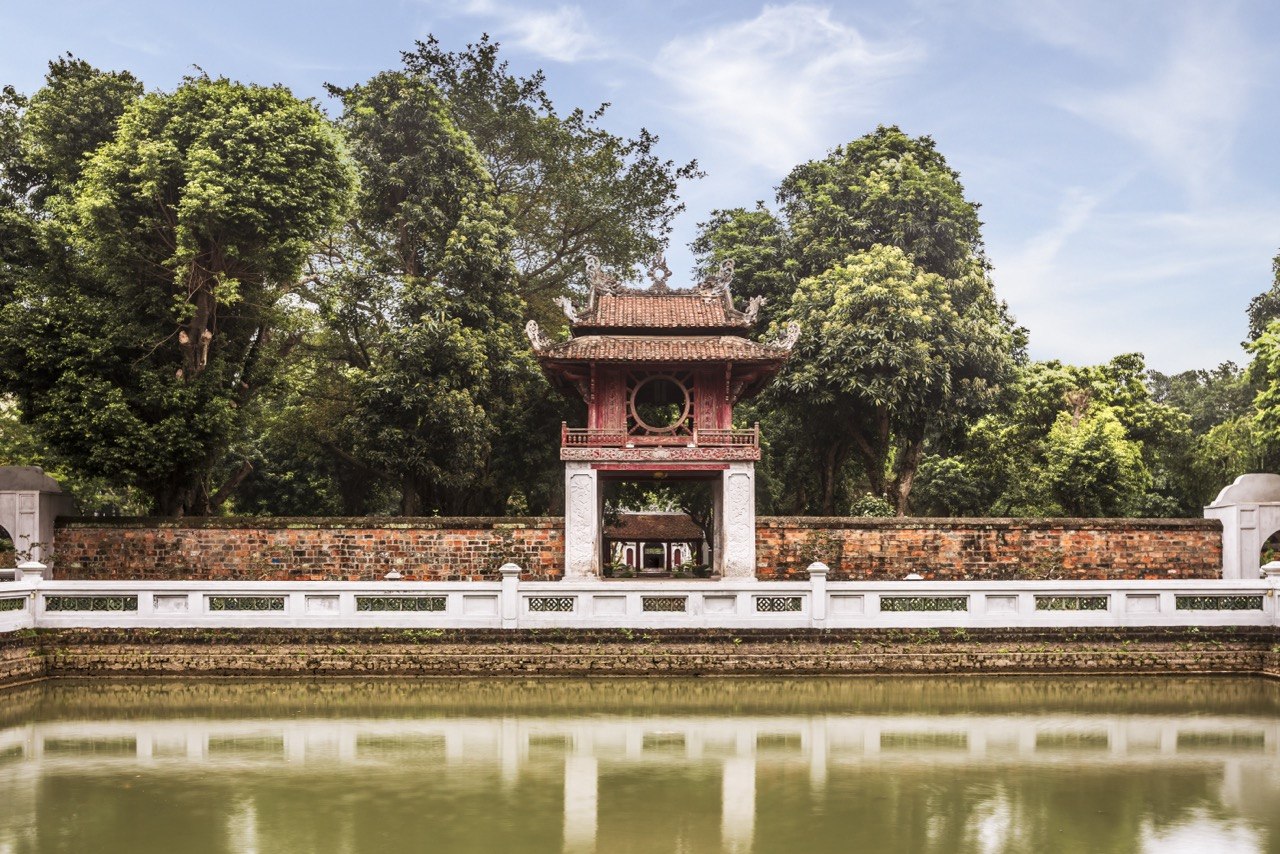
In 1805, Nguyễn Văn Thành, the Governor-General of Bắc Thành, commissioned the construction of Khuê Văn Các at Văn Miếu - Quốc Tử Giám in Hanoi. The pavilion is renowned for its symmetrical, elegant, and graceful architecture. Its lower level features a square base, while the upper level is distinguished by circular windows. The structure has a two-tiered roof covered with traditional tubular tiles.
Hanging on the upper floor is a lacquered and gilded plaque bearing the three Chinese characters “Khuê Văn Các”, meaning “Pavilion of the Constellation of Literature.” “Khuê” refers to the brightest constellation among the twenty-eight constellations recognized in ancient East Asian astronomy. The Khuê constellation consists of sixteen stars arranged in a pattern resembling the Chinese character for “literature” (文). In traditional belief, Khuê was regarded as the constellation governing literature, scholarship, and learning.
For this reason, Khuê Văn Các has become a symbol of Vietnam’s literary and educational heritage. In 2012, it was officially selected as the symbol of Hanoi Capital.